

A description of the farm
A description of the farm
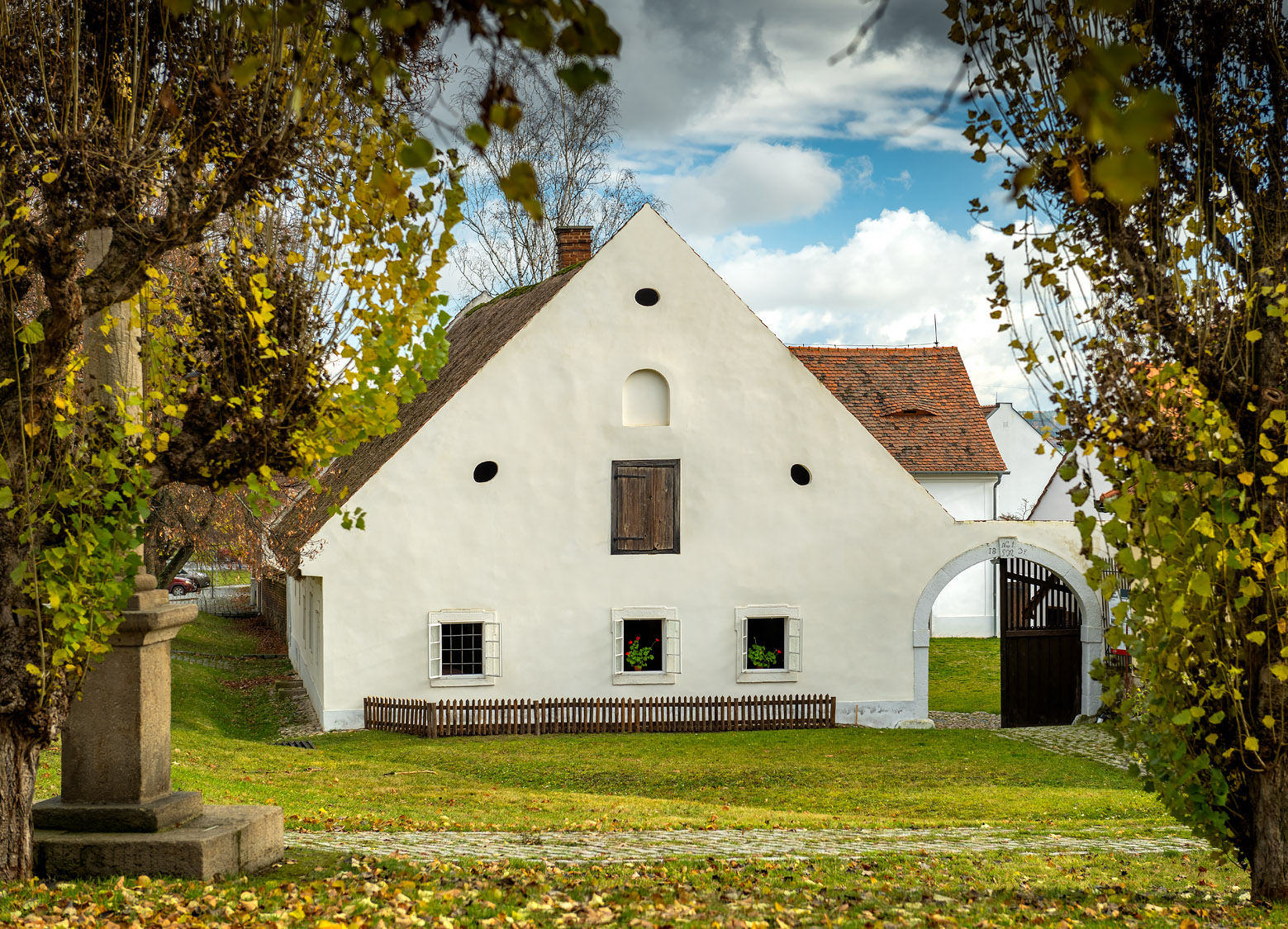
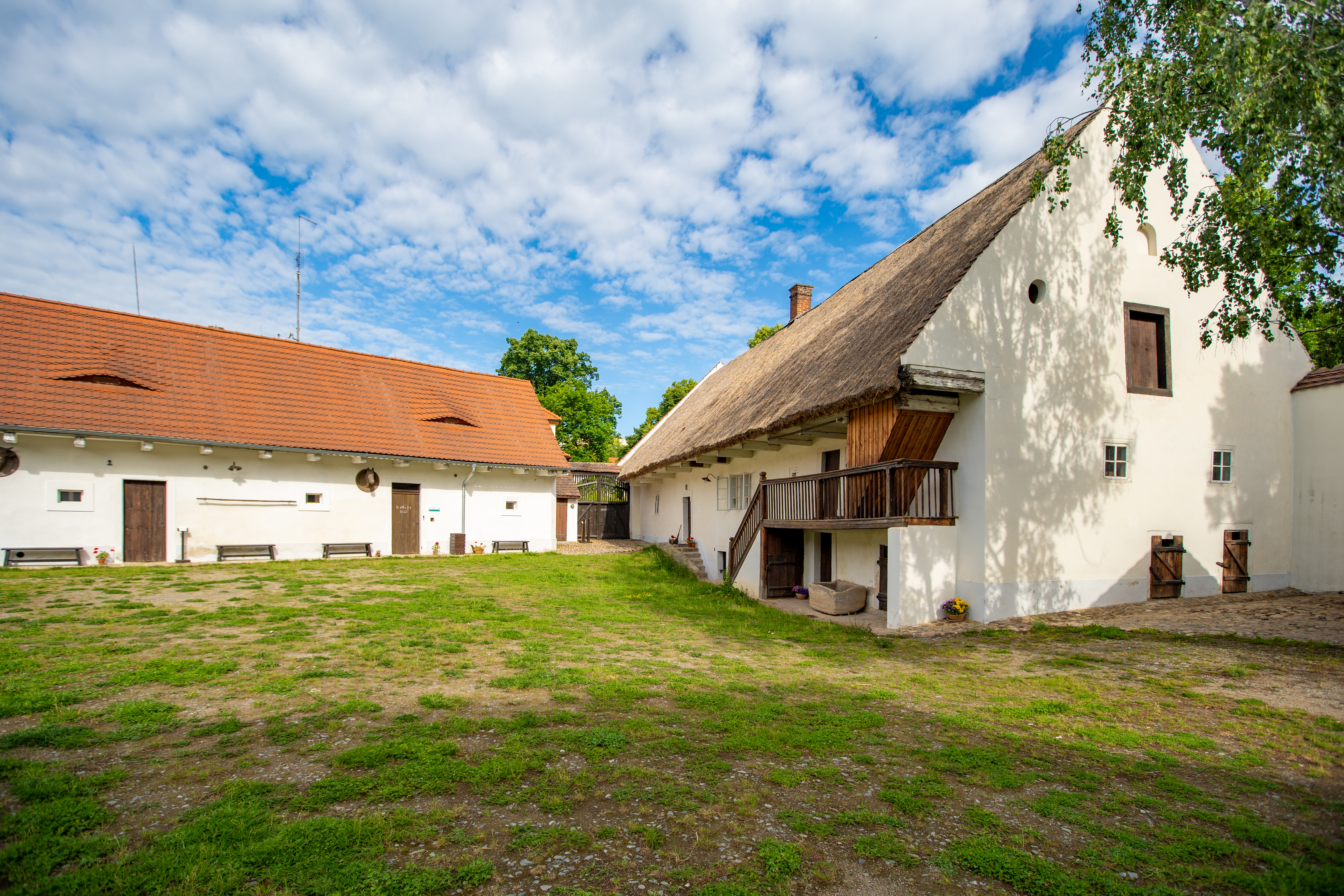
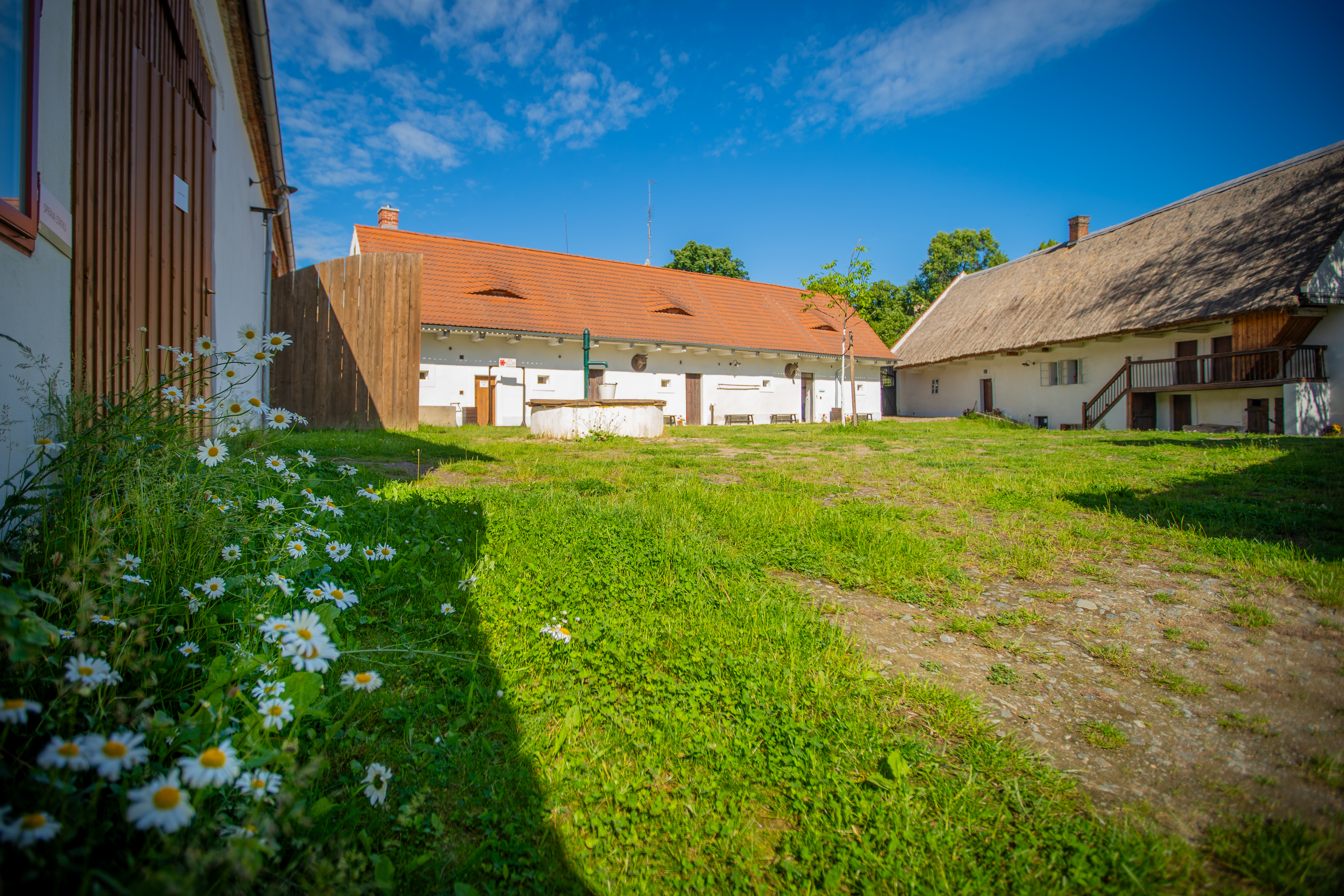
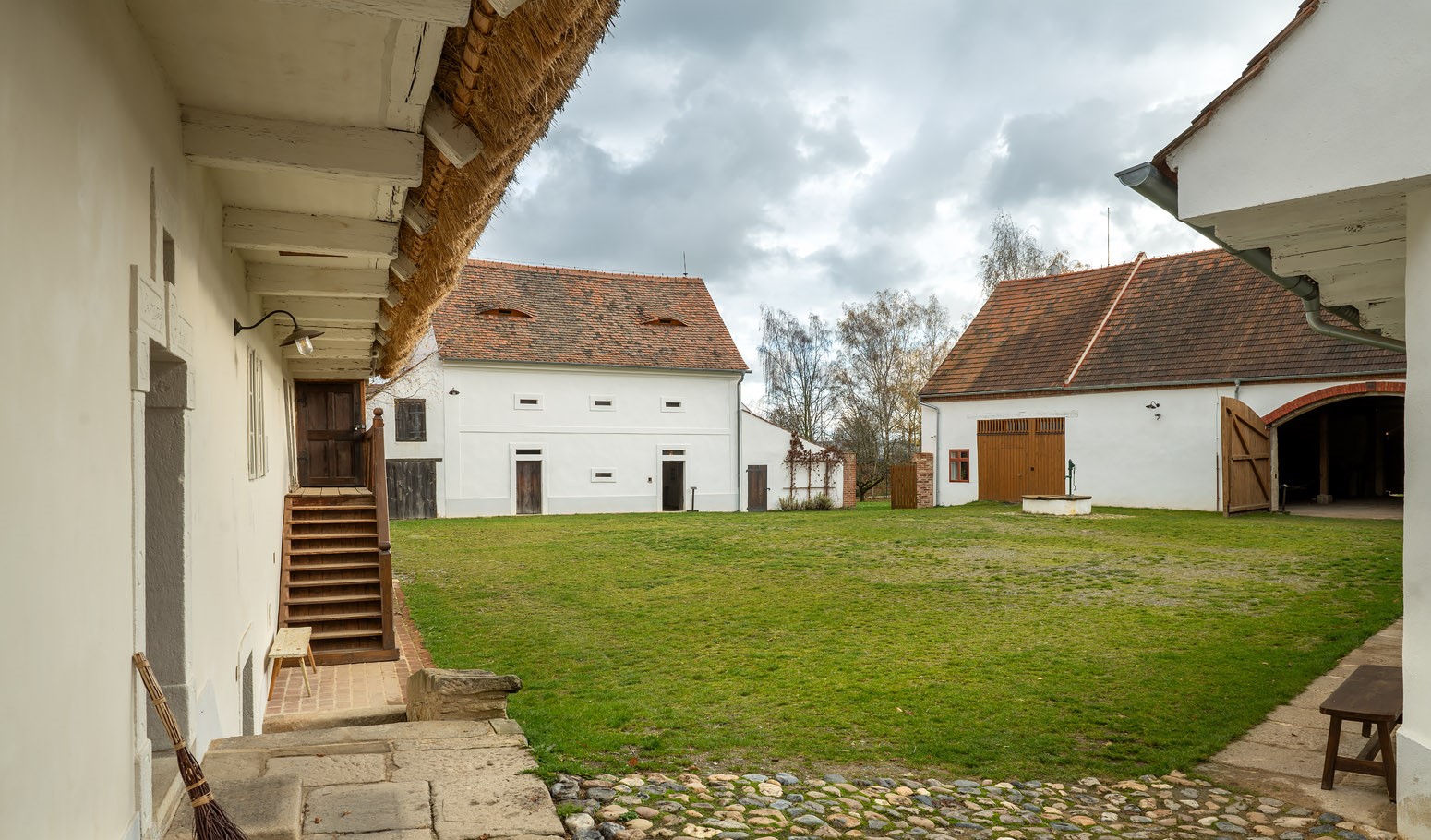
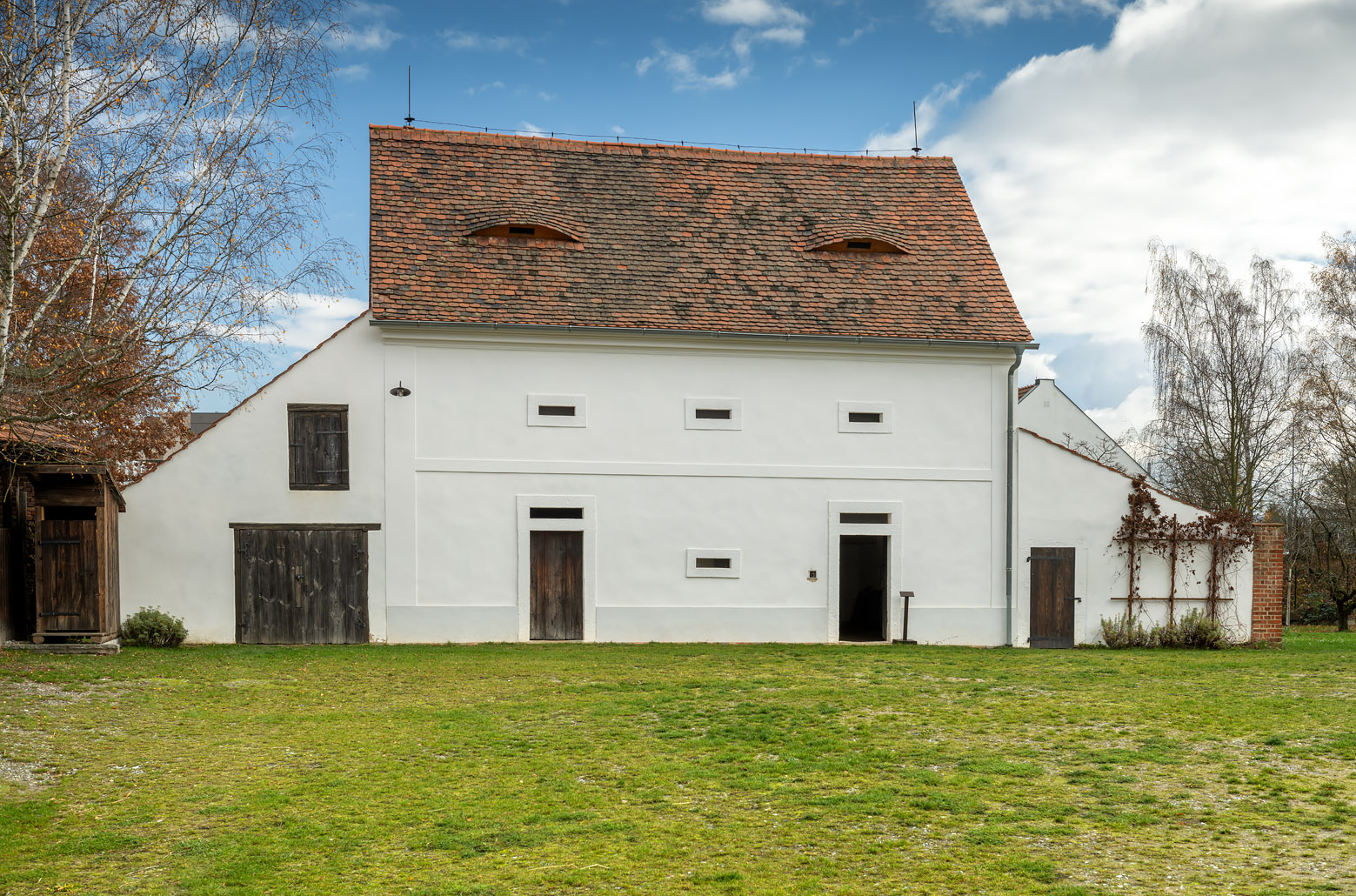
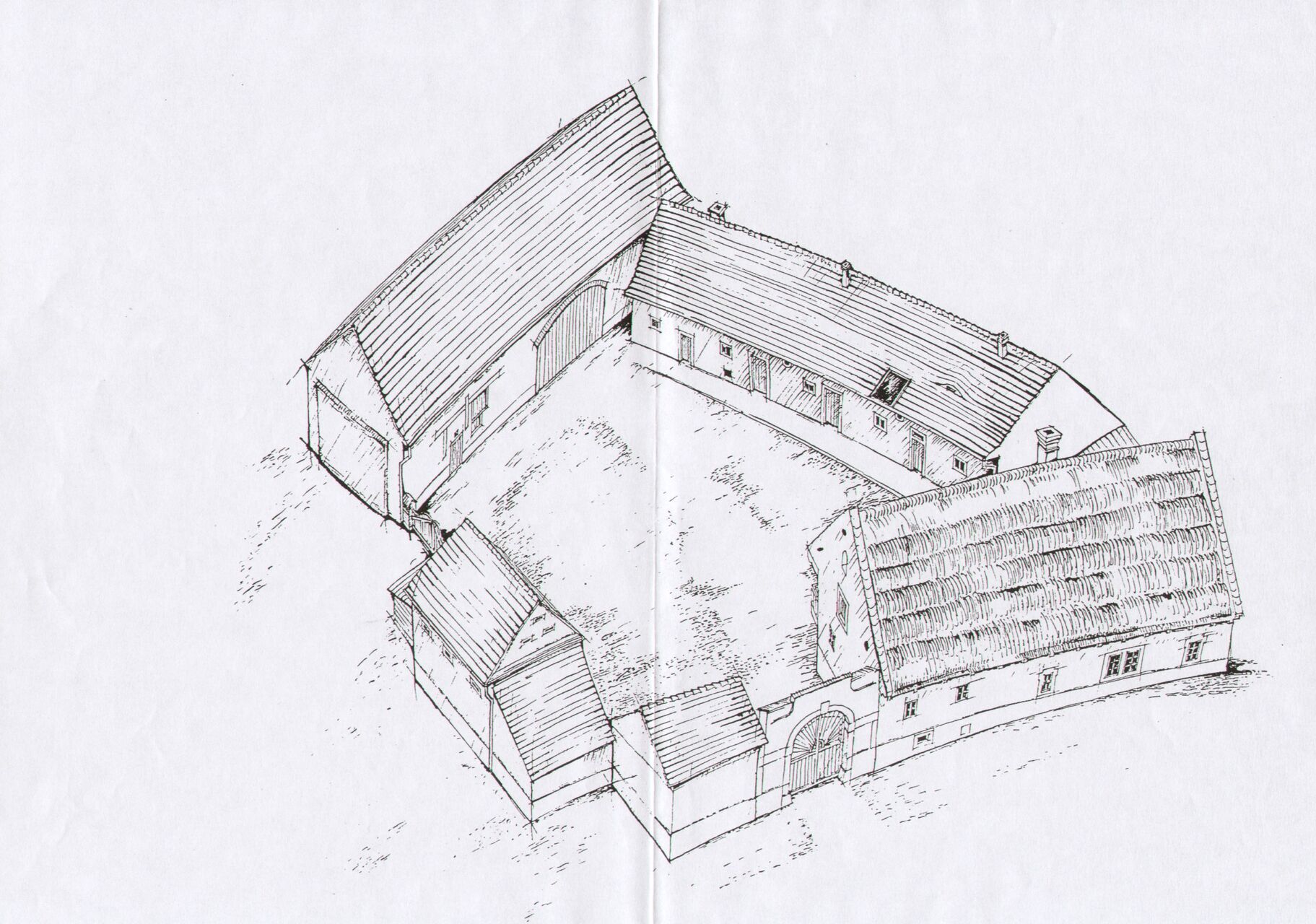
The heritage site consists of a large residential building with animal sheds and stables adjoining on the southwest side of the yard, a two-storey brick granary lying to the east and a massive barn located to the south. The surviving buildings are mainly of classicist origin.
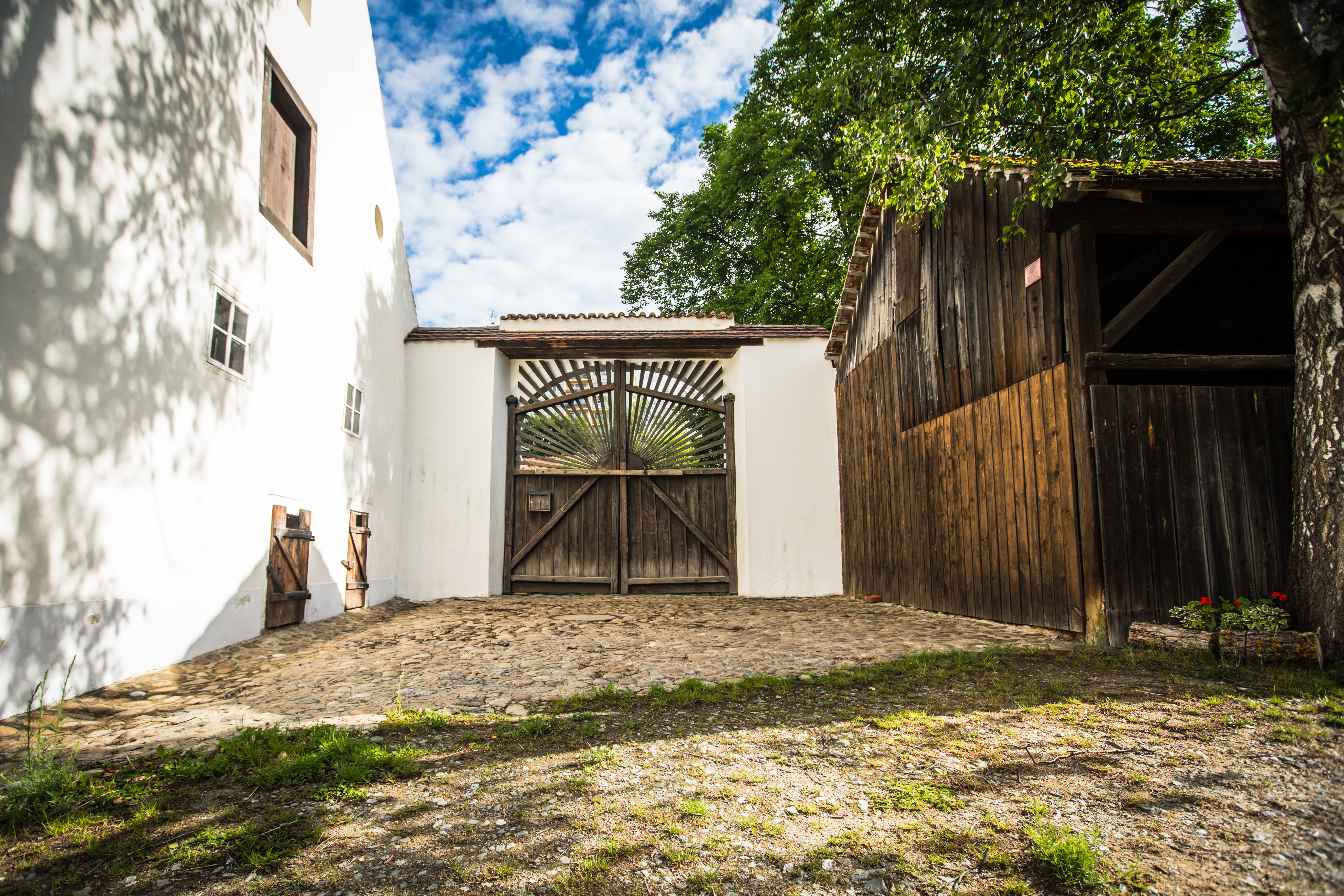
Two arched classicist brick gates are set in the line of the enclosure on the north and west sides of the yard. The dates 1830 and 1834 are engraved on massive stone portals.
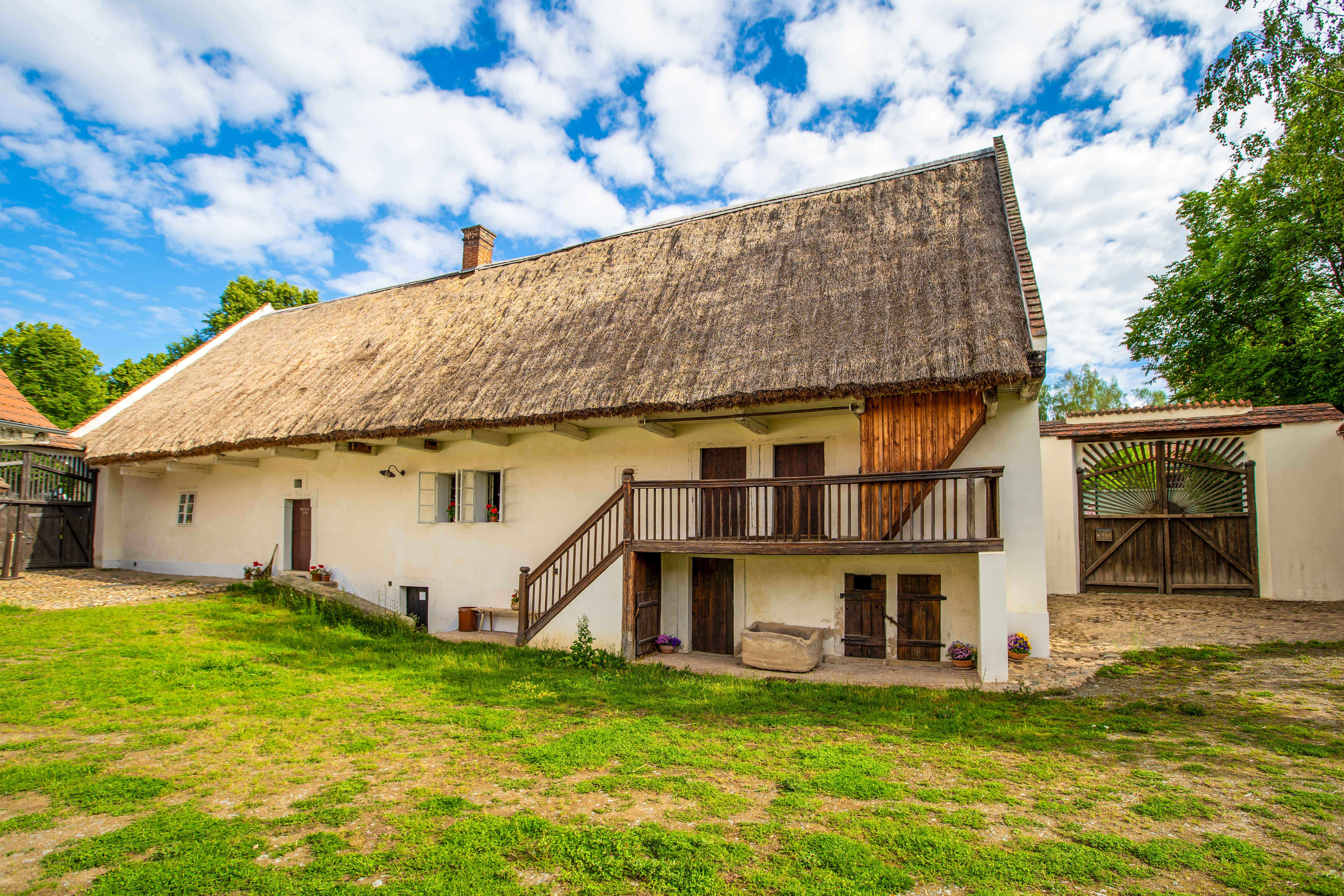
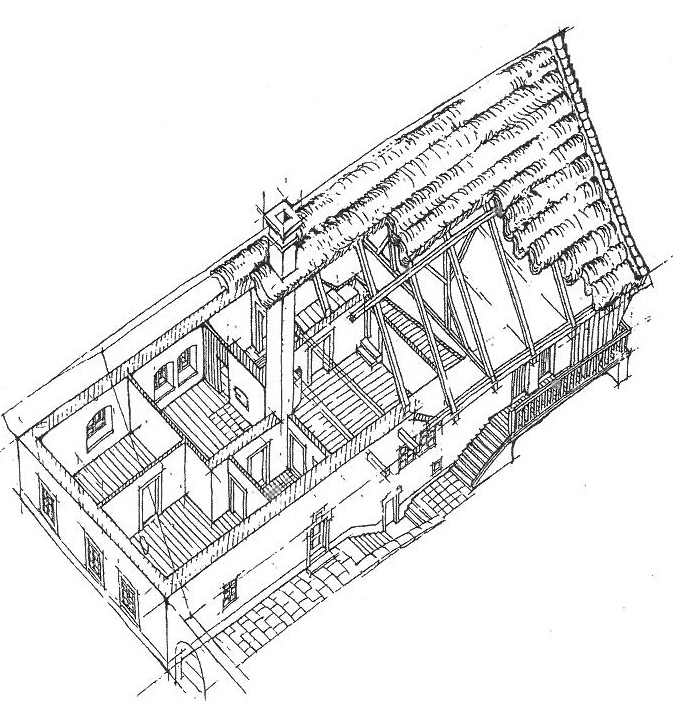
The residential building is an example of a wealthy farmer’s dwelling with a traditional three-part layout (middle, front and back parts). The hall served as an entrance area into which the individual parts of the building opened.
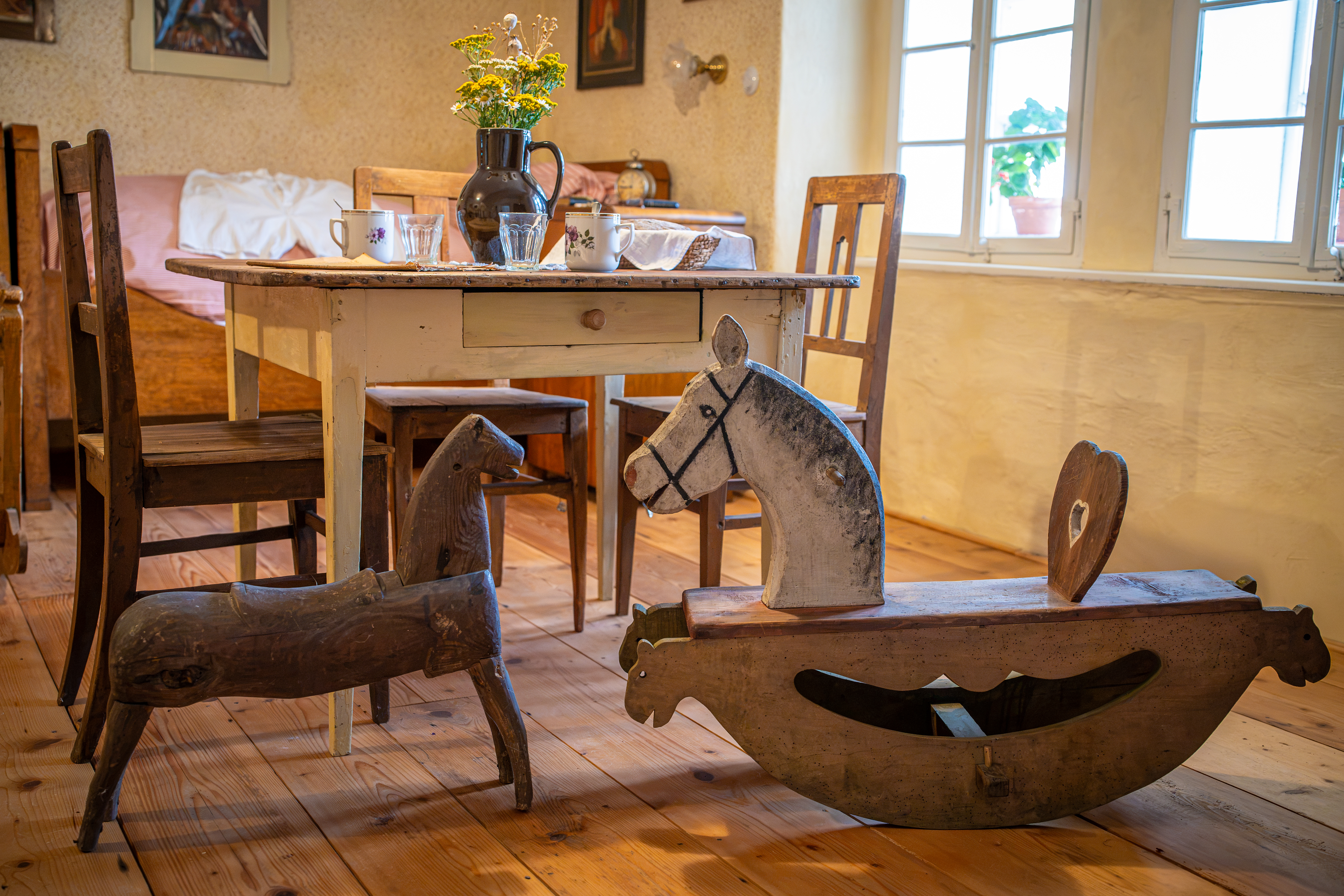
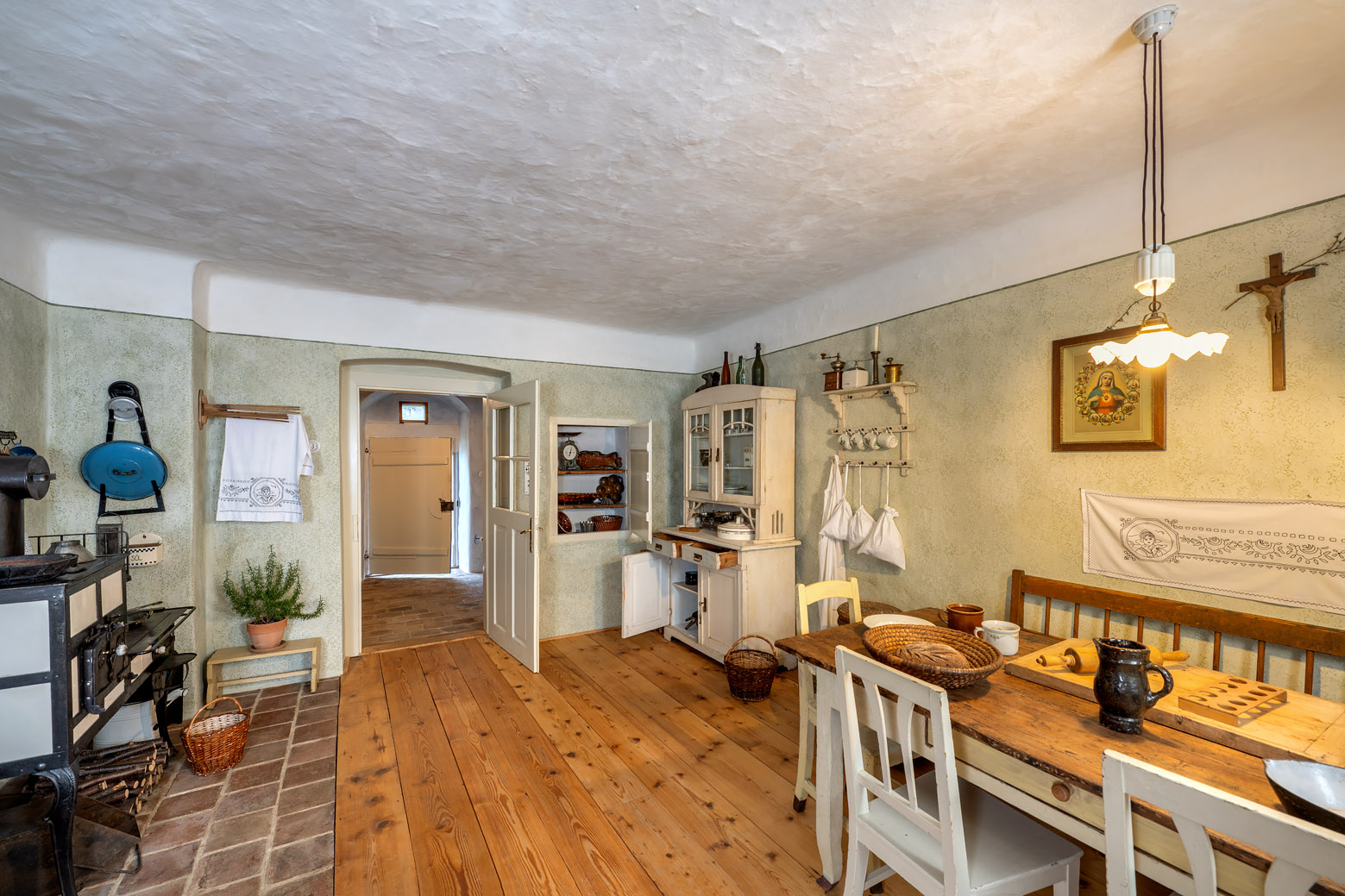
From the hall, one enters the kitchen with a stove and oven – the middle part of the building, into the parlour in the front part (which also features another small room), and then into the living room in the rear.
The service section of the building is built on two storeys. There are vaulted animal sheds on the ground floor and two more utility rooms are accessible from the gallery on the first floor. There are cellars under part of the house. Late Gothic stone portals are secondarily used in the cellars.
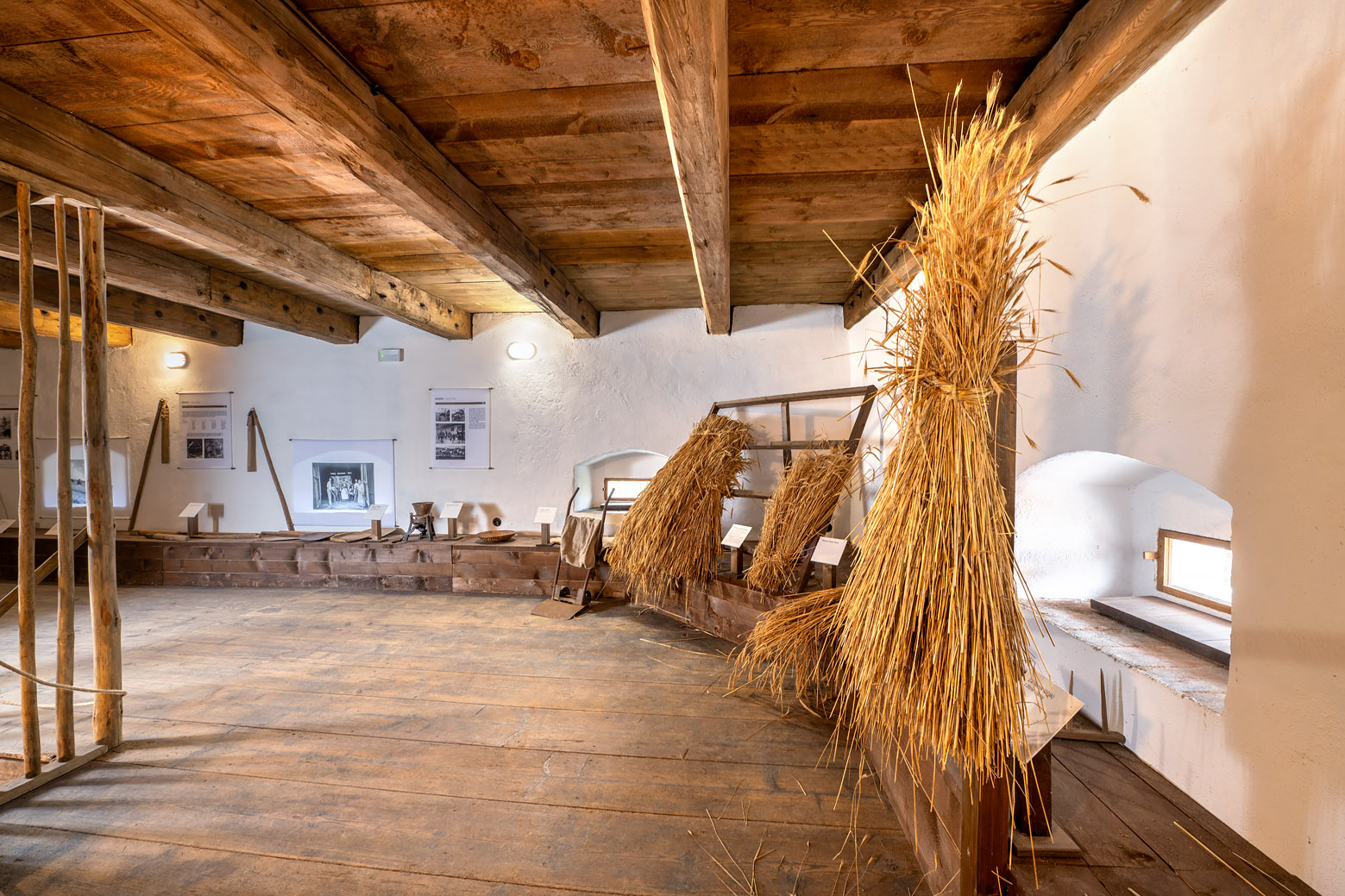
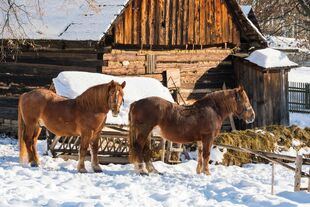
There are animal sheds and stables for horses and other livestock on the west side of the farmyard. The south side of the farmstead is enclosed by a barn and a shed. The interior of the barn features a threshing floor, two elevated platforms for the storage of sheaves or grain and the remnants of the original storey above the threshing floor.
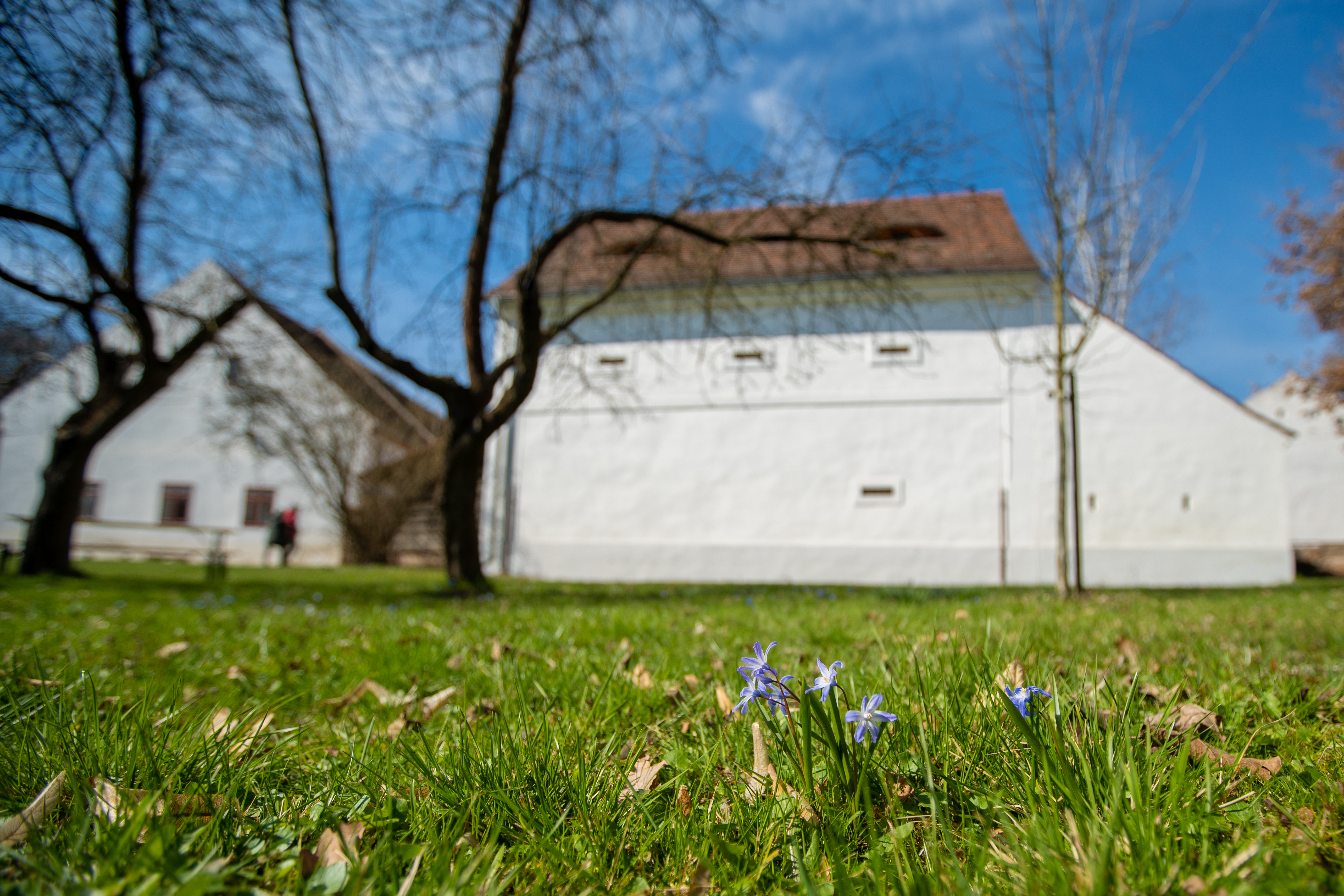
There is a granary standing on the east side. The ground floor is divided into two utility rooms, while the first floor and the loft each are just single-room spaces. A small cellar was built under the granary at a later date.
There is a shed with a section of the wall that pivots outwards to create entrance for wagons in the northeast corner of the site.
The site also features an orchard with fruit trees, where we can find apple trees, pear trees, cherry trees, plum trees and one species that is rather rare today – a fully-grown bladdernut bush at the corner of the granary.